

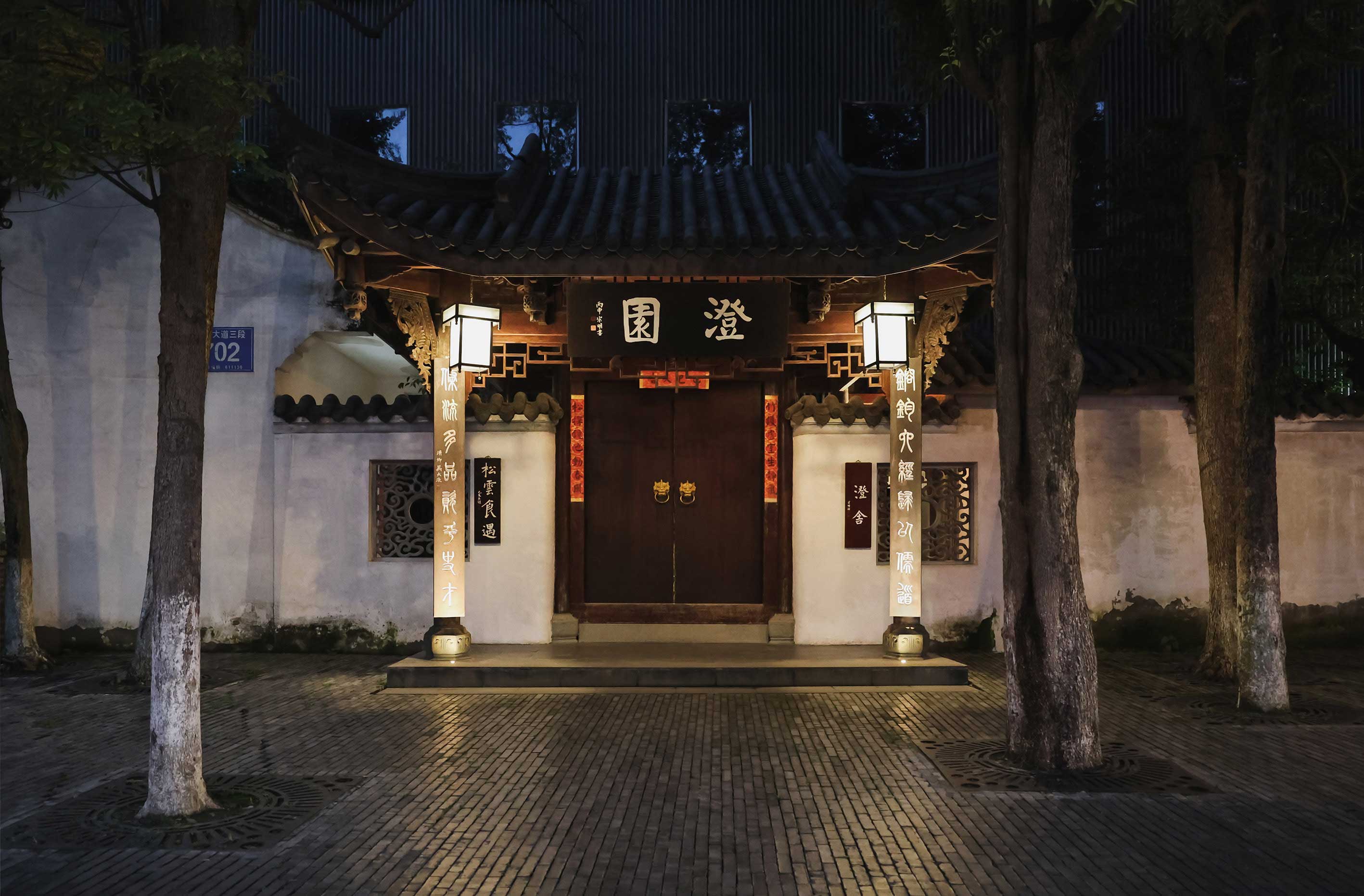
The lighting design for Chengdu Chengshe Hotel centers on the principle of “intentional absence.” While preserving the traditional courtyard layout and the garden’s spatial order, the project avoids over-illumination. Nighttime layering is created through low-position luminaires, reflected light, and selective accent lighting so the space can breathe even within darkness.
This is not a garden that is simply lit; it is a nightscape guarded by light.
Low color-temperature lanterns and wall-washers in the porch establish a sense of arrival. Brightness is restrained to a traditional scale, preserving the depth of night. The wooden door, inscribed plaque, and white walls reveal subtle layers under soft illumination; the atmosphere is dignified and serene. Lighting does not assert form so much as it underscores ritual.
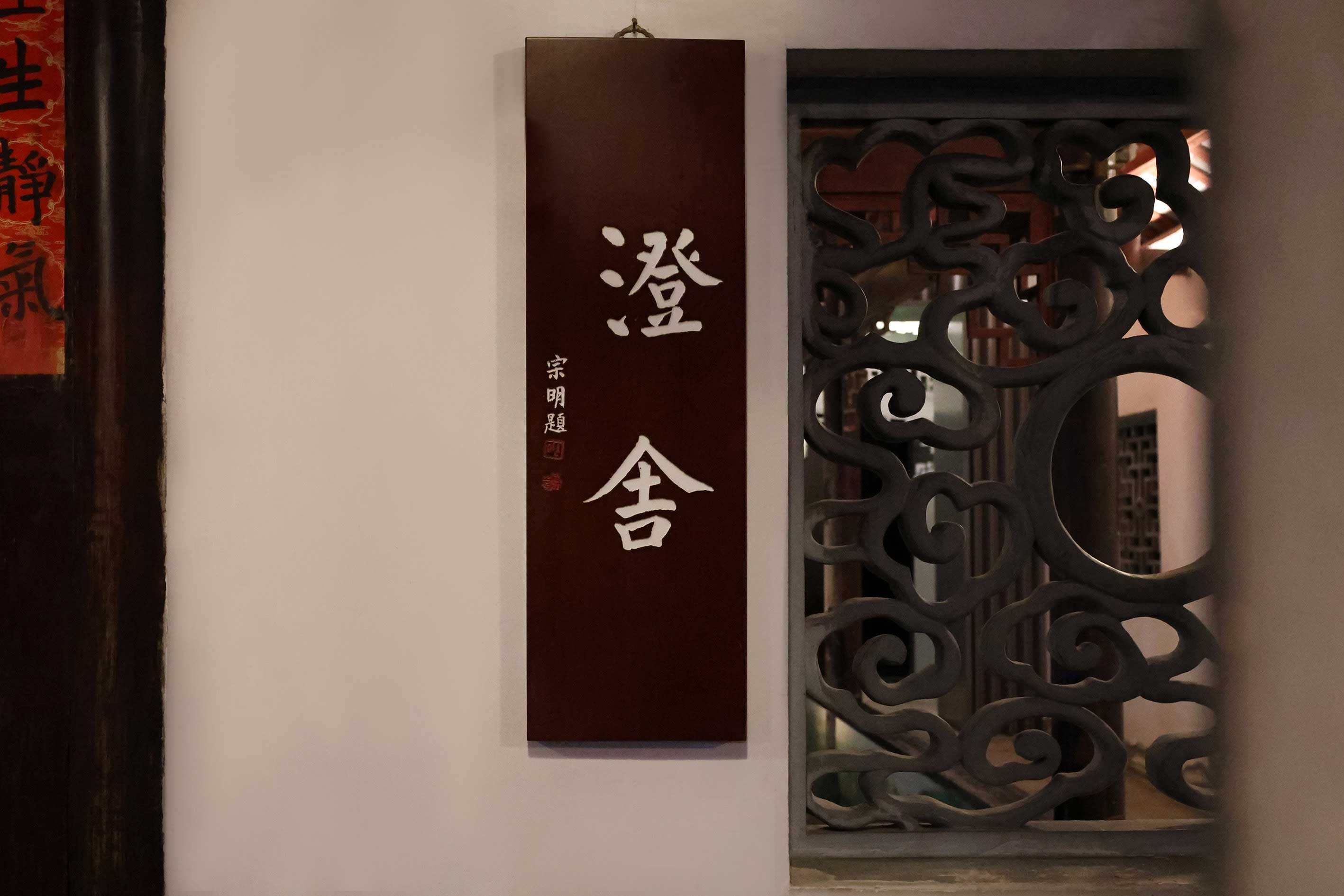
Targeted accent lighting falls on plaques and carved latticework to underscore the texture of traditional components. Background walls remain gently illuminated so lettering and structure naturally assume the visual focus. Details are given new life by the interplay of light and shadow rather than by flat exposure.
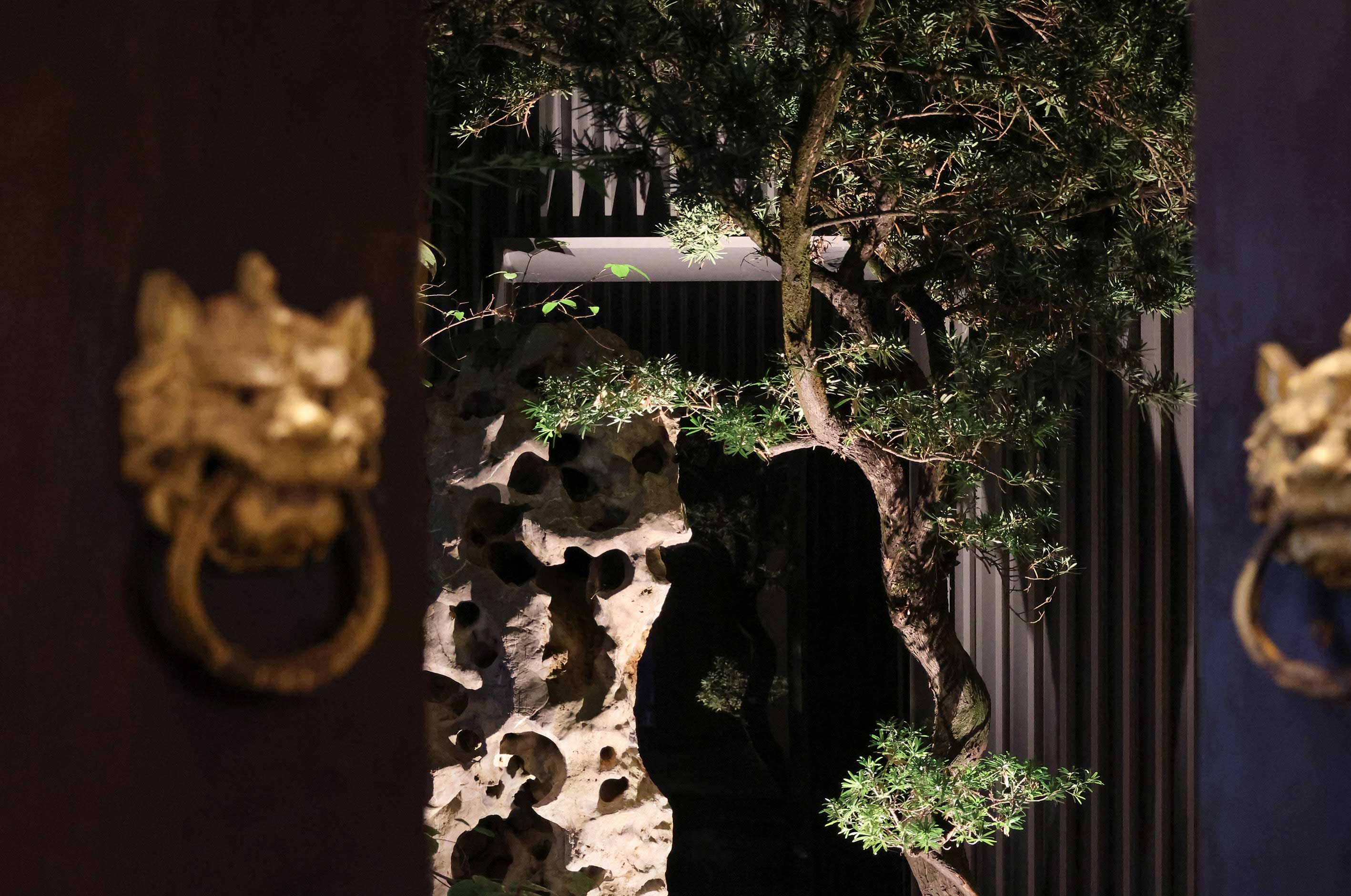
Through gateway frames, light models the silhouettes of trees and Taihu stones rather than bathing the whole courtyard. Contrasts of light and shadow establish depth and make the courtyard read as a sequence of advancing spaces at night, as if the scene were a banquet of natural light and shade.
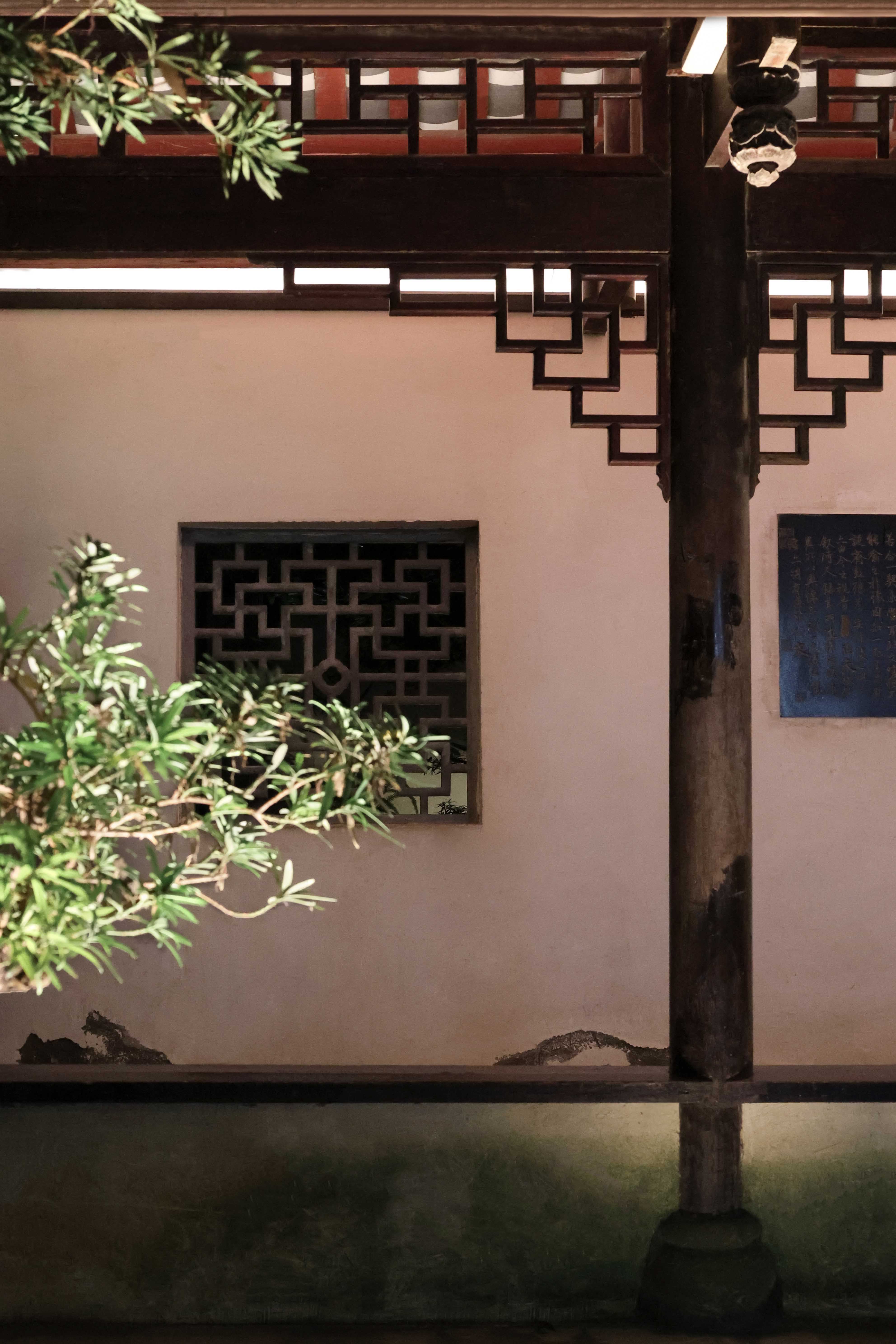
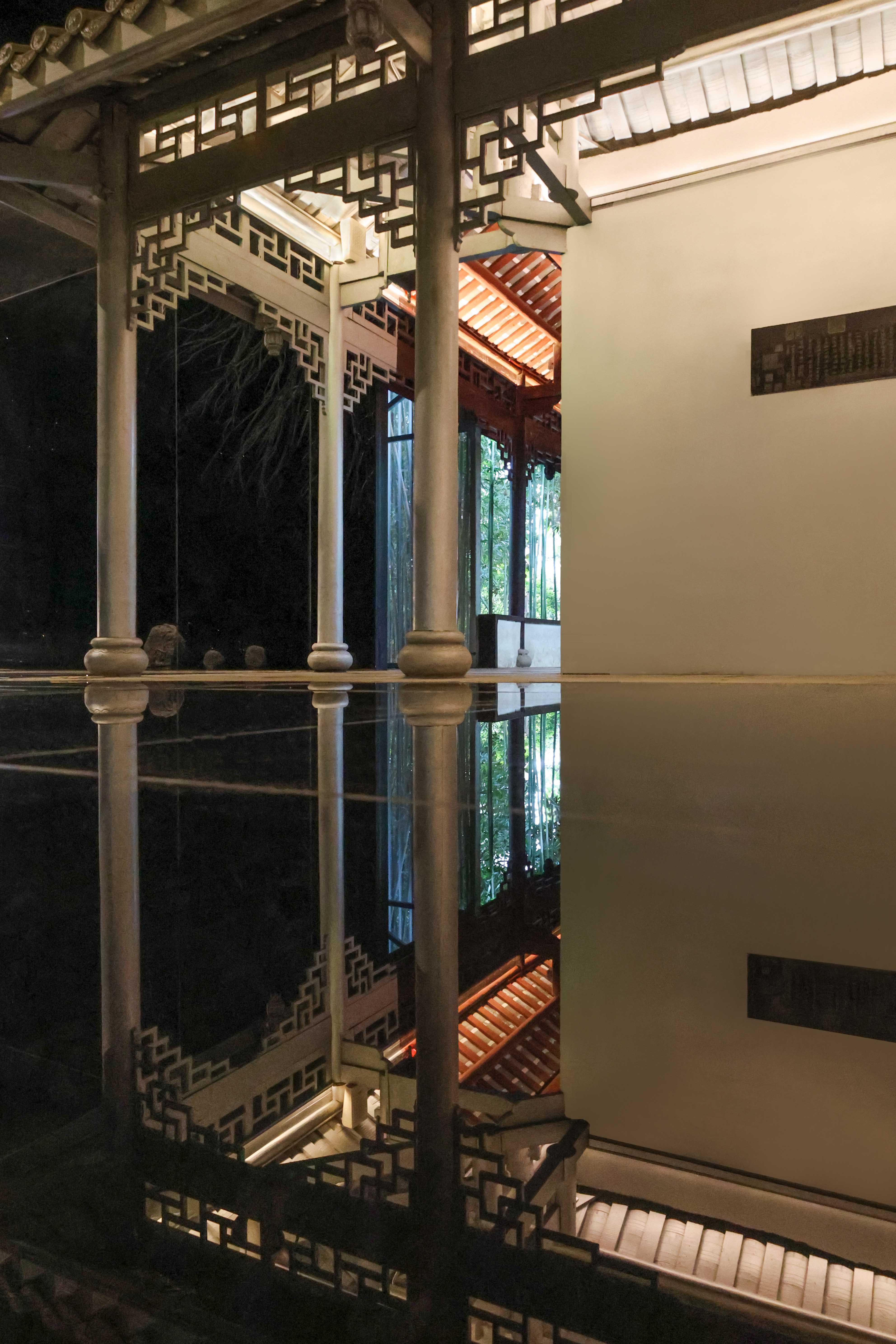
Beams, columns, and que-ti brackets are lit via indirect reflected light to reinforce timber proportions and compositional order. Wall brightness is kept minimal so the structure becomes the evening’s protagonist. The light is in service to architectural language, not decoration.
Accents are placed on natural elements; light follows stone texture and leaf forms to give them sculptural presence after dark. Background areas are kept in shadow so the natural features become the spatial focal points.
Inside the gallery, illumination is uniform enough for the structure to be read clearly from outside. Columns find extension in the high-reflectance ground plane, blurring the line between object and reflection and adding depth to the corridor’s visual effect.
Concealed linear lighting under the eaves minimizes source visibility. Light runs along the structure to guide circulation while maintaining an overall hush.
Walls are not uniformly lit; darker areas are preserved so plant shadows take center stage. The shifting patterns of light and shade record the passage of time, allowing the space to present different expressions from different viewpoints.
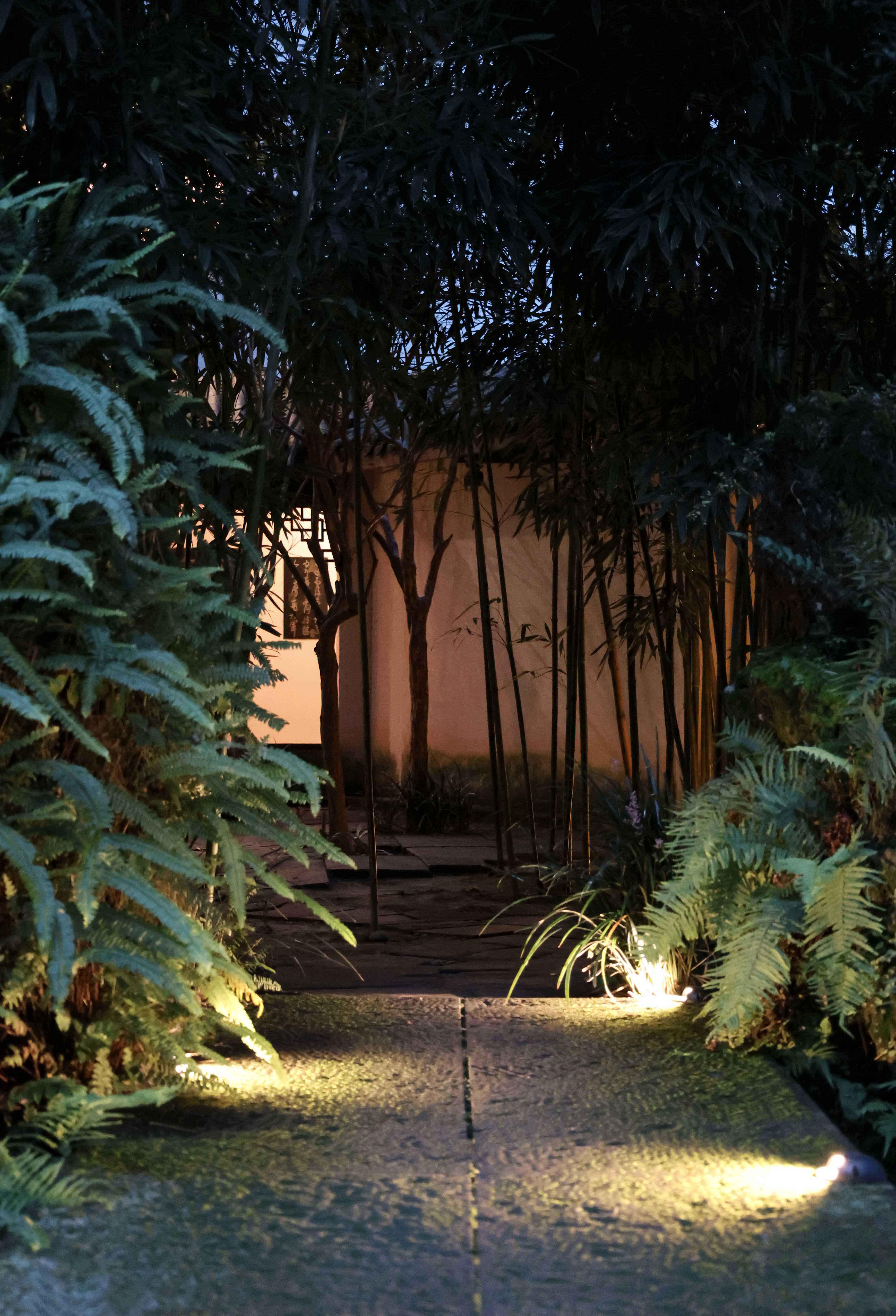
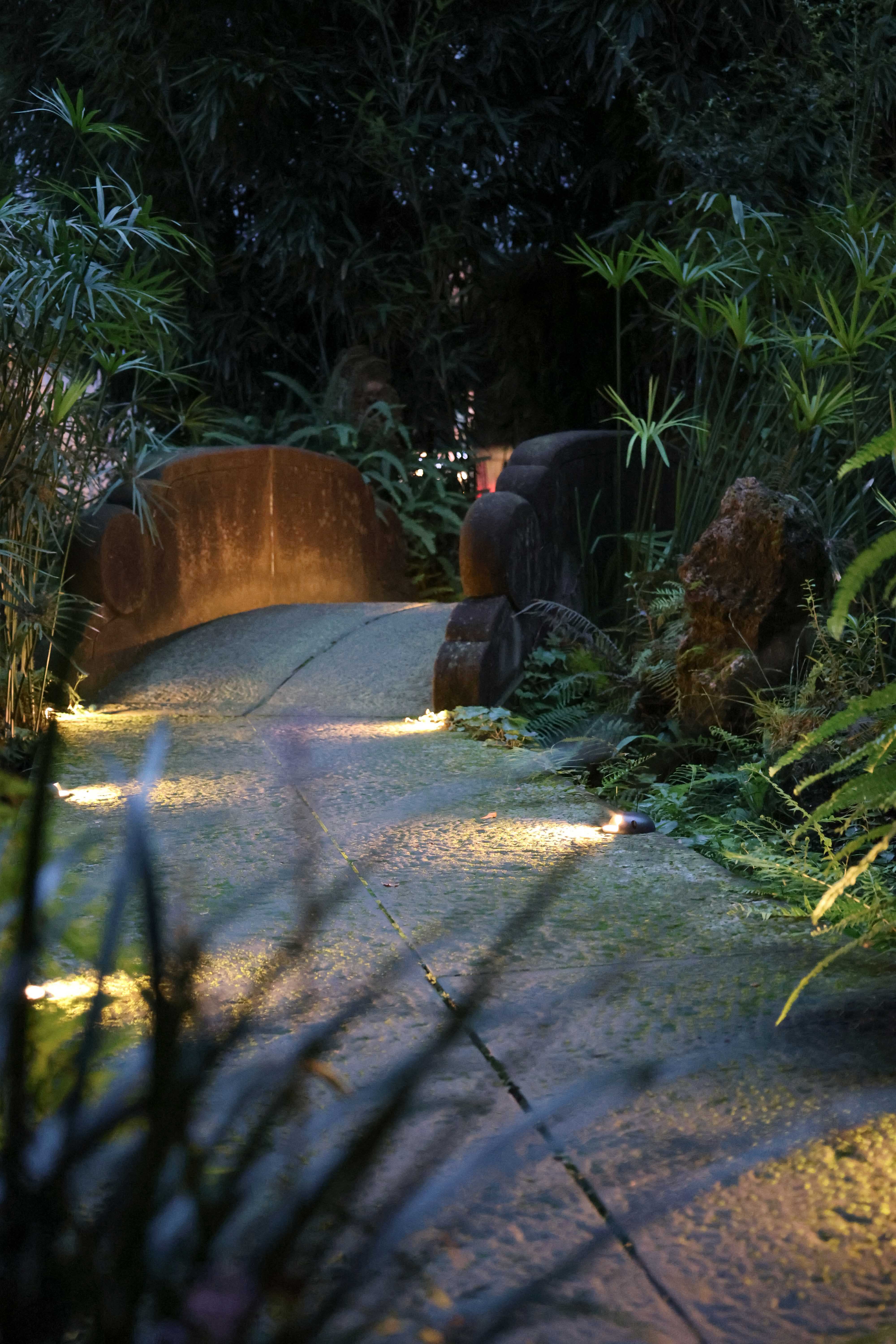
Recessed low-level uplights set into the paving delineate walking routes; luminance is held within safe limits so the overall night scene remains intact. Bridges and planting read in gentle contrast against dark backgrounds for a tranquil experience.
Light is concealed beneath the canopy, with point sources used to generate depth and directional cues. Overlapping bamboo shadows produce an enveloping, layered spatial experience that reinforces the rhythm of walking.
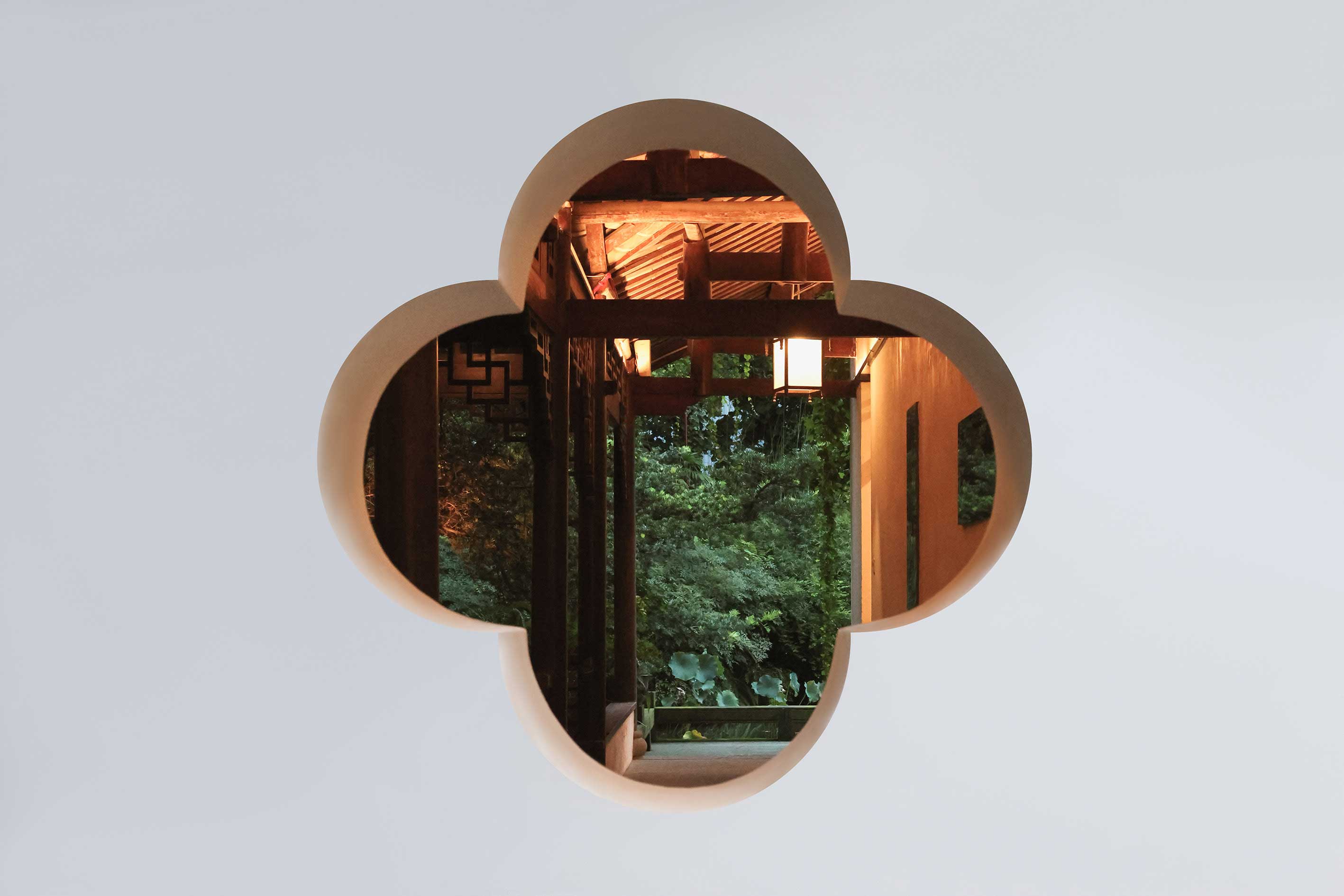
Inside the carved window the background is kept softly lit so the outer courtyard becomes the visual focus. The aperture functions like a viewfinder for reinforcing the traditional garden device of “borrowed scenery.”
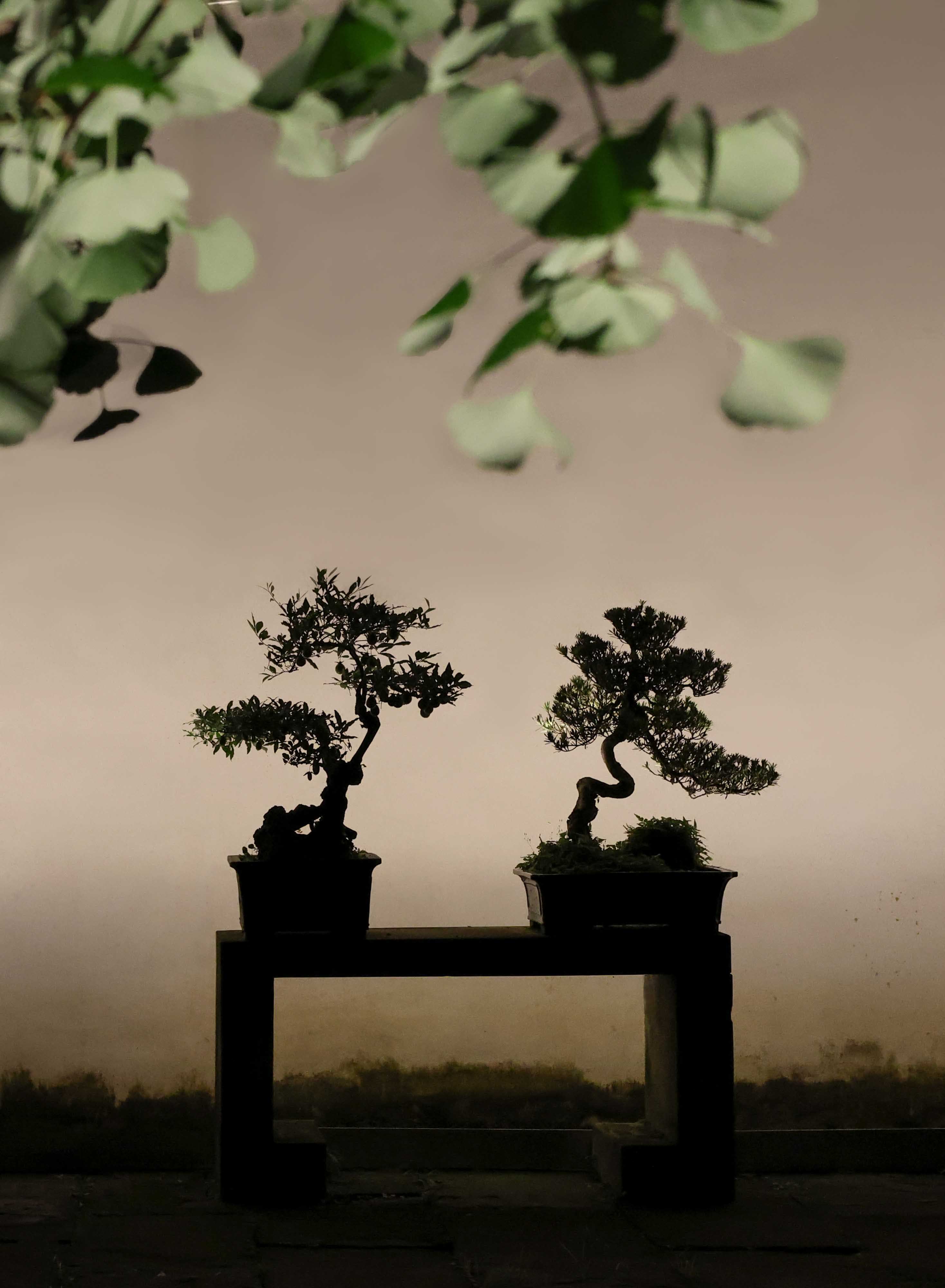
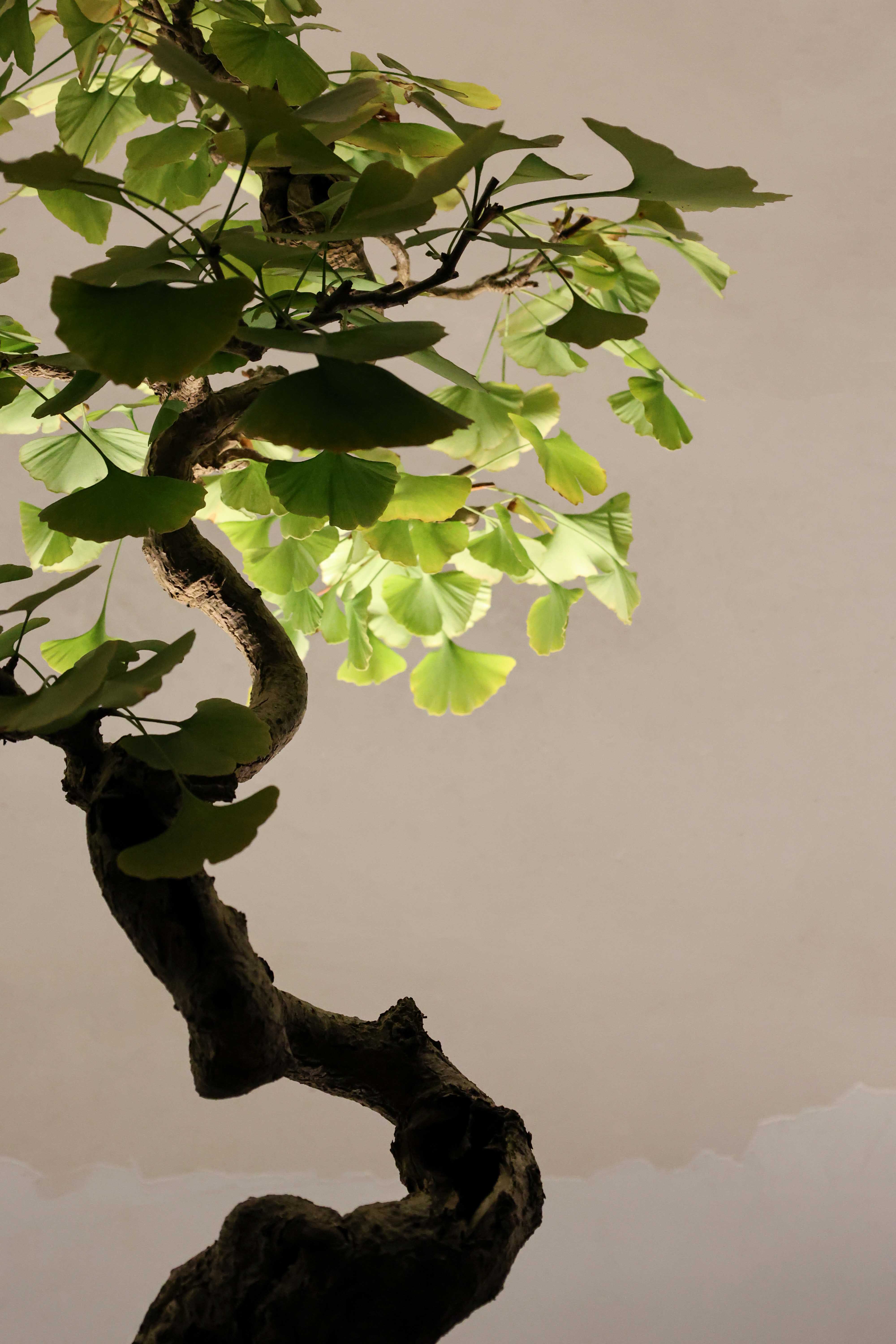
Background walls are uniformly wall-washed to create a clean canvas while focused accents precisely illuminate the bonsai. By controlling contrast, plant silhouettes stay legible and restrained at night.
Light follows the lines of branches to reveal three-dimensional form and prevents flatness from frontal grazing. Shadow becomes an element of the composition and adds tension to the arrangement.
The design rests on one conviction: light should accompany the space, not overpower it.
At the entrance and under the pergolas, structural order is emphasized. Soft wall-washing and concealed linear lighting reinforce timber proportions and the relationships between planes. Within the courtyard, the light focus shifts to natural elements, with Taihu stones, tree shadows, water, and bonsai serving as the visual anchors, while large wall planes remain restrained to establish tonal gradation and rhythm.
Paving and garden paths use low-illuminance guidance that preserves safety without disrupting the overall nightscape. Light is deployed to shape shadow rather than to expose every object; through the subtle play of light and shade the space gains a sense of time and layered depth, making movement through it a slow and meditative experience.